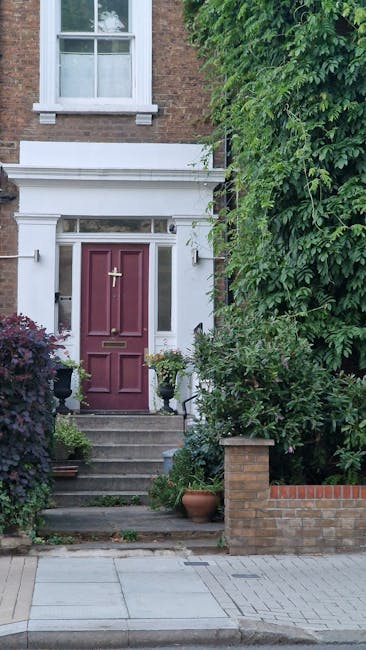
Brockley gardeners for Hilly Fields front garden makeovers
If your front garden near Hilly Fields feels a bit tired, awkward, or simply underused, you are not alone. Plenty of Brockley homes have small front spaces that need careful thinking rather than a dramatic overhaul. The right Brockley gardeners for Hilly Fields front garden makeovers can turn a patchy entrance into something tidy, welcoming, and genuinely useful without making it feel overdone.
That might mean improving kerb appeal before a sale, making a narrow plot easier to maintain, or creating a calmer entrance that fits the character of the street. It can also mean solving the less glamorous problems: poor drainage, muddy borders, leggy shrubs, awkward steps, and that one section where nothing ever seems to thrive. Truth be told, that is where good garden design earns its keep.
This guide walks through what a front garden makeover involves, how local gardeners approach it, what to expect, and how to make sensible choices for your home. You will also find practical checklists, a comparison table, and a few hard-won tips that help avoid the usual mistakes. Nothing fluffy. Just useful, real-world guidance.
Table of Contents
- Why Brockley gardeners for Hilly Fields front garden makeovers Matters
- How Brockley gardeners for Hilly Fields front garden makeovers Works
- Key Benefits and Practical Advantages
- Who This Is For and When It Makes Sense
- Step-by-Step Guidance
- Expert Tips for Better Results
- Common Mistakes to Avoid
- Tools, Resources and Recommendations
- Law, Compliance, Standards, or Best Practice
- Options, Methods, or Comparison Table
- Case Study or Real-World Example
- Practical Checklist
- Conclusion
- Frequently Asked Questions
Why Brockley gardeners for Hilly Fields front garden makeovers Matters
A front garden does more than look nice from the pavement. It frames the whole house. In an area like Brockley, where homes often mix period charm with compact plots and everyday foot traffic, the front garden has to work hard. It needs to look good, yes, but it also needs to handle London weather, delivery bikes, bin days, and the simple fact that people actually live there.
Hilly Fields adds another layer. The neighbourhood has a very local, very lived-in feel, and many gardens sit in streets where small design choices are easy to see. That means a front garden makeover is not just about planting a few shrubs and hoping for the best. It is about creating a space that suits the house, the street, and your routine.
Good local gardeners understand that. They know when a simple tidy-up is enough and when a more considered redesign will pay off. They also tend to spot practical issues that a casual glance misses: compacted soil, an awkward slope, thin borders, or a driveway edge that keeps spreading gravel everywhere. Small things, but they add up.
Expert summary: A successful front garden makeover in Brockley is usually not the most elaborate one. It is the one that fits the space, improves access, reduces upkeep, and still feels like it belongs to the house.
And let's face it, a front garden is often the first thing you see when you come home. That matters more than people admit.
How Brockley gardeners for Hilly Fields front garden makeovers Works
A proper front garden makeover usually begins with a walk-through and a conversation. A good gardener will ask how you use the space, what frustrates you, what you want to keep, and how much maintenance you realistically want to do. That last bit is important. There is no point designing a border that looks lovely in May if it becomes a chore by August.
The process often includes some combination of clearing, pruning, soil improvement, re-shaping beds, installing edging, improving paths, adding planting, and sorting drainage or levels. In some cases, the makeover is mostly soft landscaping. In others, it includes hard landscaping elements such as paving, low walls, decorative gravel, or new steps.
If you are planning a larger project, it is wise to think beyond the front garden alone. You may want a broader design approach that ties in with your garden design service or supports regular upkeep through weekly garden maintenance. That way, the makeover does not look great for one season and then quietly slide backwards.
The best Brockley gardeners for Hilly Fields front garden makeovers will usually work in stages:
- Assess the space, drainage, light, and existing plants.
- Agree on the style, budget, and maintenance level.
- Clear or reduce what is not working.
- Improve the structure of the garden first.
- Plant for shape, seasonality, and longevity.
- Finish with neat detailing, edges, and access points.
That order matters. Structure first, pretty bits second. Not glamorous, but true.
Key Benefits and Practical Advantages
A front garden makeover gives you more than a visual lift. The right changes can make the whole property feel easier to live with. In our experience, people often expect the biggest change to be cosmetic, then end up appreciating the practical wins most of all.
- Improved kerb appeal: A tidy, balanced front garden makes a house feel cared for and finished.
- Better access: Clear paths, sensible steps, and defined edges make daily movement easier.
- Lower maintenance: The right planting plan can reduce weekend workload quite a bit.
- Healthier planting: Soil improvement and smart species selection help plants survive London conditions.
- More usable space: Even a small front garden can hold bikes, bins, planting, or seating if designed well.
- Better drainage: Thoughtful groundworks can reduce puddling and muddy patches.
- Street harmony: A well-judged makeover tends to sit comfortably with neighbouring homes.
The practical advantage is simple: you get a front garden that works as a front garden, not just a photograph after the work is done.
There is also a quieter benefit. When the entrance feels sorted, the whole house often feels calmer. It sounds small. It isn't, really.
Who This Is For and When It Makes Sense
This kind of project suits a few different homeowners. You might be here because your front garden is too messy to keep on top of. Or because the current layout makes no sense. Or because the plants have slowly collapsed into a tangle of overgrowth and bare patches. That happens. Gardens do drift, especially in busy urban settings.
It makes sense if you are:
- preparing a house for sale or letting
- wanting a smarter entrance for a period property
- fed up with constant weeding and patchy planting
- dealing with poor soil or drainage
- trying to make a compact garden feel larger
- upgrading a tired frontage after building work
It also makes sense if the front garden is becoming a source of low-level irritation. You know the kind. The hedge is always too high. The border never quite fills out. The path feels cramped. The bins look terrible from the pavement. None of it is dramatic, but together it chips away at how the home feels.
If you are unsure whether to start now or later, ask yourself one question: is this space making life easier, or harder? That usually tells you enough.
Step-by-Step Guidance
1. Start with a clear brief
Before any soil is turned, be honest about what you want. Do you want a formal, neat look? Something soft and planted? More privacy? Less maintenance? A garden that works around a driveway? The clearer your brief, the easier it is for a gardener to design something that fits.
2. Check the existing conditions
Look at light, drainage, slope, shade, and what already survives. Some front gardens near Hilly Fields catch a lot of shade from boundary walls or taller neighbouring trees. Others get a surprising amount of reflected heat from paving or brickwork. That affects plant choice more than most people expect.
3. Decide what stays and what goes
Old shrubs can sometimes be reshaped and kept. Other times they are just taking up space. A local gardener should tell you plainly which is which. There is no medal for saving a plant that has been sulking for years.
4. Improve the structure first
This is the stage where the makeover becomes real. Edging, steps, path lines, beds, and level changes need to be right before planting begins. If the bones are poor, the finish never quite lands.
5. Choose planting for year-round value
Good front gardens should not rely on one good month. Mix evergreens, seasonal colour, texture, and structure so the space still feels composed in February. That is where many makeovers separate themselves from quick fixes.
6. Finish with detail
Neat edges, clean gravel, strong planting lines, and tidy transitions to paths or walls make a huge difference. It is the difference between "done" and "thoughtful".
If you are combining the makeover with other outdoor work, it can be useful to coordinate with related services such as hedge trimming or tree surgery where larger plants are involved. A front garden often looks unfinished when one oversized shrub is left to dominate the whole scene.
Expert Tips for Better Results
Here is where a few small decisions can save you a lot of annoyance later.
- Use fewer plant types, but use them well. Repetition looks calm. Too many small choices can make a front garden feel cluttered.
- Think in layers. Low plants, mid-height structure, and one or two focal elements usually work better than a flat border.
- Choose materials that age well. Some gravel, paving, and edging materials look great on day one and a bit tired by month six. Be picky.
- Allow for maintenance access. Every plant eventually needs trimming. If you cannot reach it, you will end up resenting it. Harsh, but fair.
- Use evergreen structure sparingly. A front garden needs backbone, but too much can feel heavy.
- Match the house style. Victorian, Edwardian, and modern frontage all ask for slightly different responses.
A little local observation helps too. In Brockley, front gardens often sit right on the edge of public view, so simple clean lines usually read better than busy ornament. Not always. But often enough.
And one more thing: if a design looks lovely only from a bird's-eye plan, it may not work on the ground. Stand in the doorway. Look out. That is the view that counts.
Common Mistakes to Avoid
Front garden projects can go wrong in predictable ways. The good news is that most of them are avoidable.
- Overplanting: A small front garden can disappear under too many species and too many textures.
- Ignoring drainage: Pretty borders do not help if water sits against the path after rain.
- Choosing plants for summer only: A front garden needs to look acceptable in winter too.
- Forgetting scale: Large shrubs can overwhelm narrow spaces surprisingly quickly.
- Using the wrong surface material: Some finishes become slippery, messy, or hard to maintain.
- Skipping the maintenance plan: A makeover without aftercare is just a short-lived clean-up.
One of the biggest mistakes is trying to make the front garden do everything. Privacy, storage, flowers, symmetry, drama, and zero maintenance. That is a lot. You usually have to prioritise two or three things and let the rest support them.
To be fair, that is not a failure. That is design.
Tools, Resources and Recommendations
If you are doing part of the work yourself, or simply want to understand what the gardener may use, a few tools and materials come up often in front garden makeovers.
- quality secateurs and loppers for pruning
- spades, forks, and trowels for bed work
- edging tools for sharp, tidy borders
- weed control fabric used carefully, not blindly
- compost or soil improver for tired beds
- decorative gravel or mulch where appropriate
- compact paving or stepping materials for narrow access areas
If you want a broader understanding of outdoor upkeep after the main project, it can help to read about garden clearance and lawn care. Even when a front garden has little or no lawn, the principles of ground health, weed control, and regular care still matter.
For larger properties or more ambitious planting schemes, a site visit from a gardener who can advise on repeated seasonal care is usually money well spent. Fancy plans are easy. Keeping them alive is the actual job.
Law, Compliance, Standards, or Best Practice
Front garden makeovers in London are usually straightforward, but there are a few sensible boundaries to keep in mind. If your property is leased, shared, or part of a managed building, check who is responsible for the front area before making structural changes. That sounds obvious, but mix-ups happen more often than they should.
Where paving, drainage, boundary walls, or access changes are involved, a reputable gardener or landscaper should work to accepted UK best practice, use suitable materials, and flag anything that may need separate trades or permissions. If a wall is shared, or if you are altering access onto a pavement or driveway, it is worth checking local requirements rather than assuming it is all fine. Better a short pause than a messy correction later.
Health and safety matters too. Tools, lifting, and waste removal all carry ordinary risks. Responsible contractors should work tidily, protect surfaces where needed, and leave access safe at the end of the day. If anything seems uncertain, ask. Good professionals do not mind.
For older homes, especially in conservation-style streets or properties with heritage features, keep the original character in mind. The best front garden makeover usually respects the house instead of trying to fight it.
Options, Methods, or Comparison Table
Not every front garden needs the same type of makeover. Sometimes a light refresh is enough. Other times a full redesign is the better call. Here is a simple comparison to help you think it through.
| Approach | Best for | Typical work involved | Maintenance level |
|---|---|---|---|
| Light refresh | Gardens that are basically sound but untidy | Pruning, weeding, edging, fresh mulch, minor planting | Low to medium |
| Structural makeover | Spaces with poor layout, drainage, or access | Rebuilding beds, paths, steps, borders, and planting scheme | Medium |
| Full front garden redesign | Gardens that feel cramped, dated, or hard to use | Layout changes, surface replacement, planting plan, finishing details | Varies by design |
A light refresh is often enough if the bones are good. But if the path is awkward or the soil is exhausted, patching over the surface may only delay the real work. A proper gardener should help you decide which route makes sense, not push the biggest one by default.
Case Study or Real-World Example
Imagine a typical Brockley front garden near Hilly Fields: a narrow plot, a tired border, a low hedge that has thinned out, and a path that feels more cramped than welcoming. The homeowner wants it to look smarter, but not formal in a stiff way. They also want less weekend maintenance, because life is already busy enough.
A sensible makeover might begin with clearing the dead growth, reshaping the border, and testing the soil. The path edges could be tightened up so the entrance looks cleaner straight away. Then a small planting palette could be installed: a couple of evergreen shrubs for structure, a handful of perennials for seasonal interest, and ground cover to reduce bare patches. If the garden gets strong morning sun, plants would be chosen accordingly. If it is shaded, the mix would shift.
The real win is not that it becomes a showpiece. It becomes coherent. The house feels more settled from the street, the entrance looks cared for, and the owner no longer has to fight the same weak spots every month. Small victory, perhaps. But a meaningful one.
That is the kind of result good Brockley gardeners for Hilly Fields front garden makeovers should aim for: not flashy, not fussy, just right.
Practical Checklist
Use this checklist before you start speaking to a gardener or approving a design.
- Decide what you want the front garden to do: look better, reduce maintenance, improve access, or all three.
- Measure the space and note any slopes, steps, or drainage issues.
- Photograph the area in different light if possible.
- List the plants or features you want to keep.
- Think about how much time you will actually spend maintaining it.
- Set a realistic budget range.
- Ask whether any paving, wall, or access changes may need extra checks.
- Choose a style that suits the house, not just a Pinterest board.
- Plan for year-round appearance, not only spring and summer.
- Arrange aftercare so the garden settles in properly.
Quick reminder: the best makeovers are usually the ones that solve three practical problems at once.
Conclusion
A front garden makeover is one of those projects that can quietly change how you feel about your home. Around Hilly Fields, where streets have character and frontages are close to public view, the details matter. The right Brockley gardeners for Hilly Fields front garden makeovers will not just tidy things up; they will help shape a space that feels welcoming, manageable, and suited to the way you actually live.
Keep the brief clear, respect the house style, and focus on structure before decoration. If you do that, even a modest plot can make a strong impression. And if you are still weighing up your options, start with the practical question: what would make this space easier to live with every single day?
Get a free quote today and see how much you can save.
Done well, a front garden does not shout. It simply feels right every time you walk past it.
Frequently Asked Questions
What do Brockley gardeners for Hilly Fields front garden makeovers usually include?
They usually include some mix of clearing, pruning, soil improvement, border reshaping, planting, edging, and sometimes paving or path improvements. The exact work depends on the size and condition of the garden.
How much maintenance will a redesigned front garden need?
That depends on the planting scheme and materials used. A well-planned front garden can be low maintenance, but no garden is truly zero maintenance. Expect seasonal tidying, some pruning, and occasional weeding at minimum.
Can a small front garden still have a proper makeover?
Absolutely. Small spaces often benefit the most from a clear layout, restrained planting, and good edging. In fact, tight spaces usually improve quickly once the structure is sorted out.
What makes a front garden suitable for Hilly Fields and Brockley homes?
Generally, a good fit means the garden respects the house style, handles local weather well, and works in a compact urban setting. Practicality matters just as much as appearance.
Do I need planning permission for a front garden makeover?
Not usually for straightforward planting and tidying. But if you are changing boundaries, major surfaces, or access arrangements, it is sensible to check local requirements before work begins.
How do I choose the right plants for a front garden in London?
Choose plants based on light, soil, exposure, and how much care you want to give them. A good gardener will recommend species that cope well with urban conditions and still look good across the year.
Is gravel a good idea for a front garden makeover?
It can be, especially for drainage and a neat look, but only if it is installed properly and suits the space. Poorly chosen gravel can scatter, look messy, or become difficult to manage.
How long does a front garden makeover usually take?
It varies a lot. A small refresh may take only a short visit, while a more involved redesign can take several stages. The condition of the existing garden usually matters more than the size alone.
What should I ask a gardener before hiring them?
Ask about their approach to design, maintenance, plant selection, drainage, and aftercare. It also helps to ask how they handle small urban front gardens, since that is a very different job from a large open space.
Will a makeover improve kerb appeal straight away?
Usually, yes. Even simple changes like sharper edges, healthier planting, and a cleaner layout can make a big difference from the pavement. The effect is often more noticeable than people expect.
What is the biggest mistake people make with front garden makeovers?
Trying to do too much at once. A front garden works best when it has a clear role, a sensible layout, and plants that suit the site. Overcomplication tends to create more maintenance and less satisfaction.
Should I keep old shrubs or start fresh?
Sometimes old shrubs are worth keeping, especially if they are healthy and can be shaped well. But if they dominate the space, look tired, or block light, replacing them may be the better option. A site assessment is the safest way to judge.